The Ultimate 2026 Guide to Semantic HTML: Mastering Date, Time, and SEO Structure
Published on: by Techlantica
Welcome to web development in 2026! As artificial intelligence and search engines become incredibly smart, writing clean, structured code is more important than ever. Whether you are building a tech blog on WordPress or an eCommerce platform, mastering semantic HTML is your secret weapon for dominating global search results.

Why Semantic HTML Still Matters in 2026
In a world where AI agents read websites to summarize answers for users, machines are reading your code just as much as humans are. Semantic HTML tells the browser exactly what your content means, rather than just how it looks.
The Magic of the <time> Tag
One of the most underutilized elements in web design is the HTML5 time tag. It allows search engines to accurately index exactly when your post was published, making it crucial for trending tech news.
How to Format Dates and Times Correctly
When you wrap a date in a time tag, you should include a datetime attribute formatted in standard machine-readable format. Here is how we do it:
<time datetime="2026-08-09T19:00">August 9th at 7:00 PM</time>Best Practices for Global Audiences
If you are targeting a worldwide audience on Techlantica, always include time zones in your metadata. This ensures that a reader in New York and a reader in Tokyo both understand exactly when an event happens.
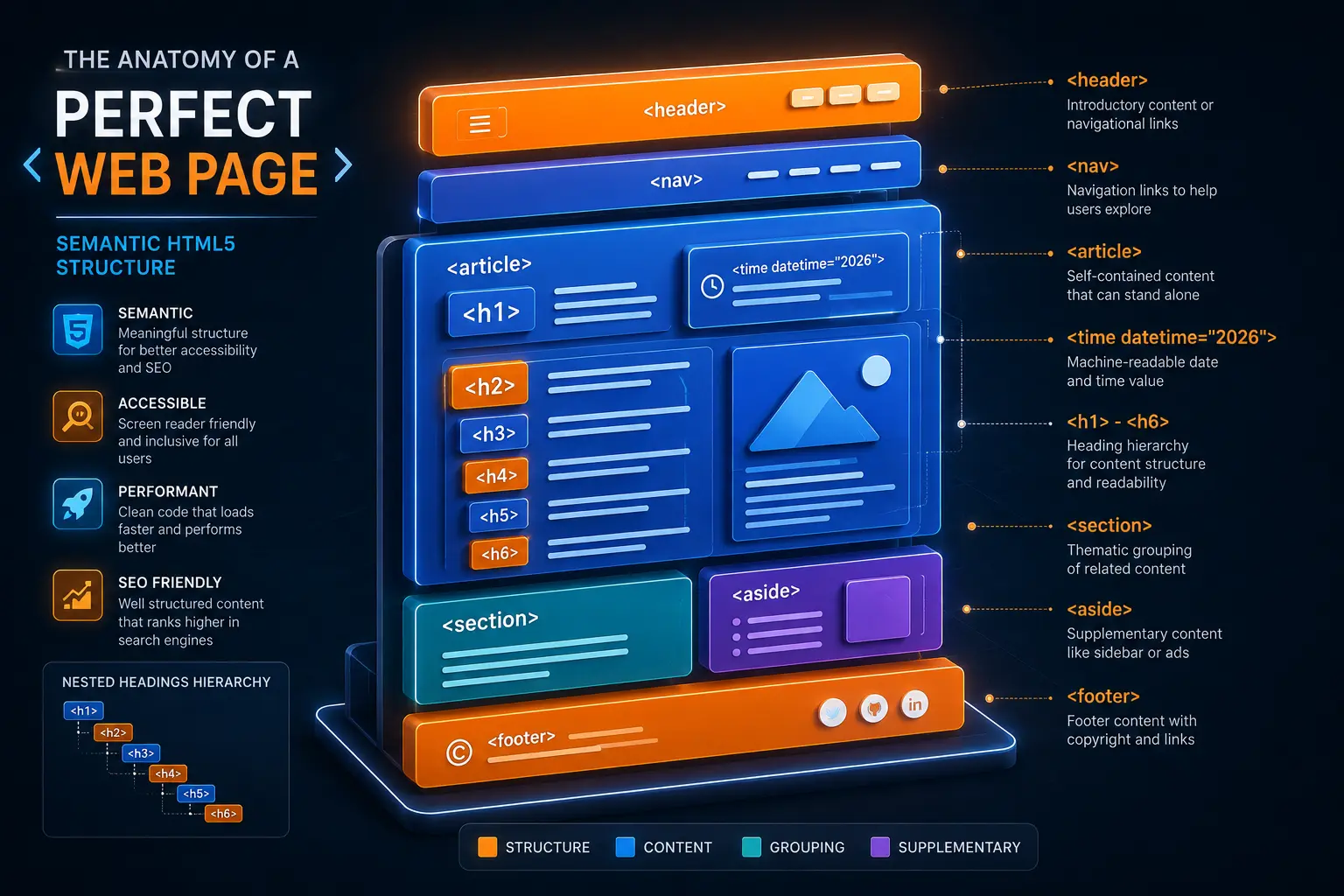
A Quick Note on HTML Headings (H1 to H6)
While it might be tempting to just make text bold, using proper heading tags (H1 through H6) creates a readable "table of contents" for web browsers. Remember to always use them in descending order without skipping a level!
Bringing It All Together in Elementor
To use this exact structure, simply drop an HTML Widget into your Elementor page, paste this code, and watch your Astra theme perfectly inherit the styles. Keep your tags semantic, keep your images in WebP format, and watch your global audience grow!